


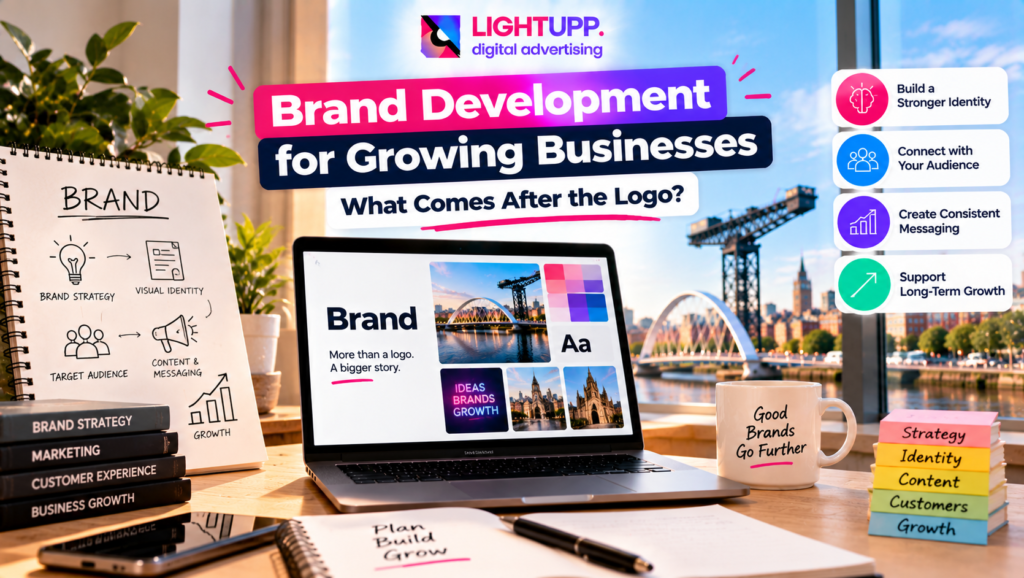
Most businesses start with a logo. It goes on the van, the website, the business cards and for a while, that’s enough. But as a business grows, more people join, more channels open up, and more customers come in who’ve never met the founder. Suddenly the logo isn’t doing the job on its own. Different people describe the business differently, the social media looks nothing like the website, and new customers aren’t quite sure what makes you different.
That’s where brand development comes in. This guide explains what it means, the signs you need it, and how LightUpp’s brand strategy https://lightupp.co.uk/branding/brand-strategy/ service helps growing Glasgow businesses build a brand that scales.
What Is Brand Development?
Brand development is the ongoing work of shaping how your business is seen your positioning, personality, voice and visual identity and making sure it stays consistent as you grow. A logo is one part of it. Brand strategy is the thinking behind it, which we explain in Brand Strategy vs Branding: What’s the Difference? https://lightupp.co.uk/brand-strategy-vs-branding-whats-the-difference-and-why-it-matters/.
The Building Blocks
1. Positioning
What you do, who it’s for, and why someone should choose you over the alternatives. If you can’t say it in one sentence, customers won’t be able to either.
2. Personality and values
Are you friendly and down to earth, or premium and precise? Fast and practical, or careful and thorough? Personality shapes every interaction customers have with you.
3. Tone of voice
How you write and speak on your website, social media, emails and phone calls. A consistent voice makes you recognisable even without your logo.
4. Visual identity
Logo, colours, fonts, photography style and design elements. Our guide to logo design in Glasgow https://lightupp.co.uk/logo-design-in-glasgow-what-a-good-logo-actually-needs-to-do/ explains what makes a logo work, and our brand identity and logo design https://lightupp.co.uk/branding/brand-identity-logo-design/ service builds complete identities.
5. Brand guidelines
A simple document that sets out how all of the above should be used, so staff, freelancers, printers and agencies all get it right without asking.
Signs Your Business Needs Brand Development
- You’ve grown, but your brand still looks like it did on day one
- Your website, social media and print materials all look different
- Staff describe what you do in different ways
- You’re moving upmarket, into a new sector or a new area
- Competitors look more established, even if you’re better
- Your marketing works, but people forget who you are
Sometimes the answer is a full rebrand; often it’s refining what you already have. Signs Your Business Needs a Rebrand (and Signs It Doesn’t) https://lightupp.co.uk/signs-your-business-needs-a-rebrand-and-signs-it-doesnt/ helps you tell the difference.
Brand Development vs Rebranding
| Green Flag | Red Flag |
|---|---|
| Brand development: evolves what you have | Rebrand: replaces it with something new |
| Keeps recognition you’ve already built | Starts recognition again from scratch |
| Fills gaps voice, guidelines, photography | Changes name, logo or positioning |
| Ongoing as the business grows | A one-off project at a turning point |
Keeping the Brand Consistent as You Grow
The biggest threat to a growing brand isn’t a bad logo it’s inconsistency. Every new channel, staff member and supplier is a chance for the brand to drift. A few habits keep it on track:
- Create templates for social posts, presentations and documents
- Brief every new supplier and agency with your guidelines
- Use real, consistent photography rather than mixed stock images
- Review your brand once a year as the business changes
Consistency is what makes customers recognise you in half a second the idea behind The Half-Second Test https://lightupp.co.uk/the-half-second-test-why-branding-decides-whether-glasgow-customers-notice-you/. Real images help too: see Business Photography and Videography in Glasgow https://lightupp.co.uk/business-photography-and-videography-in-glasgow-why-real-images-beat-stock-photos/.
How Brand Development Supports Your Marketing
A clear brand makes every other kind of marketing more effective. Ads get recognised faster, social posts feel more familiar, and your website converts better because visitors trust what they see. That’s why branding and marketing work best together something we cover in Branding Agency vs Marketing Agency https://lightupp.co.uk/branding-agency-vs-marketing-agency-whats-the-difference-and-which-do-you-need/.
Choosing a Branding Partner
Look for a team that asks about your business, customers and plans before showing you designs, and can apply the brand across everything you use not just hand over a logo file. The Best Branding & Design Studios in Glasgow https://lightupp.co.uk/the-best-branding-design-studios-in-glasgow-what-to-look-for-and-who-to-trust/ has a full checklist.
Why Glasgow Businesses Choose LightUpp
At LightUpp https://lightupp.co.uk/ we develop brands that grow with the business. Our brand strategy https://lightupp.co.uk/branding/brand-strategy/ work defines your positioning and voice, our branding team https://lightupp.co.uk/branding/ builds the visual identity and guidelines, and our marketing https://lightupp.co.uk/marketing/ and social media https://lightupp.co.uk/social-media/ teams put it to work so your brand stays consistent from the website to the van.
Frequently Asked Questions
What is brand development?
The ongoing work of shaping how your business is seen positioning, personality, voice and visual identity and keeping it consistent as you grow.
Is brand development the same as a rebrand?
No. Brand development usually builds on what you already have. A rebrand replaces your name, logo or positioning with something new.
When should a business invest in brand development?
When you’ve grown beyond your original brand, your channels look inconsistent, or you’re moving into a new market or price point.
What should brand guidelines include?
Your logo usage, colours, fonts, photography style, tone of voice and examples of how to apply them. Keep them simple enough that people actually use them.
Related Reading
- Brand Strategy vs Branding what’s the difference https://lightupp.co.uk/brand-strategy-vs-branding-whats-the-difference-and-why-it-matters/
- Signs Your Business Needs a Rebrand and signs it doesn’t https://lightupp.co.uk/signs-your-business-needs-a-rebrand-and-signs-it-doesnt/
- The Best Branding & Design Studios in Glasgow what to look for https://lightupp.co.uk/the-best-branding-design-studios-in-glasgow-what-to-look-for-and-who-to-trust/


