


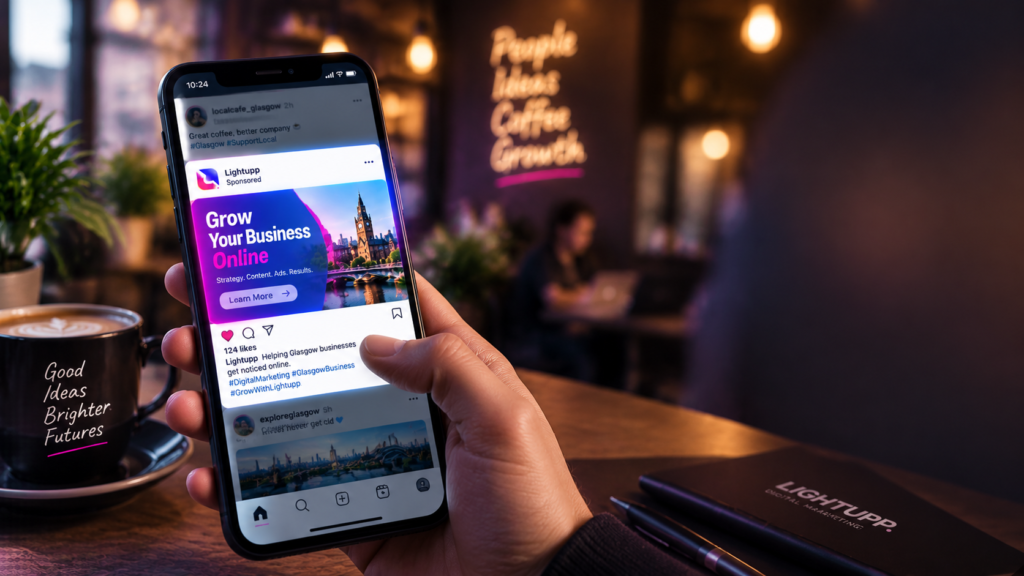
Boosting a post is not social media advertising, though a great many businesses think it is – and then conclude paid social doesn’t work. Real paid social involves choosing who sees your ad, what they see, and what happens when they act on it. This guide covers how it genuinely works, what separates campaigns that perform from spend that disappears, and whether it suits your business at all.
Boosting vs Advertising
Worth clearing up first, because the distinction explains most disappointment with paid social.
- Boosting takes an existing post and shows it to more people, with minimal control over who
- Advertising builds a campaign with a defined objective, audience, creative, and destination
Boosting is a blunt instrument. It can work for simple awareness, but it won’t optimise toward enquiries, and it gives you little to learn from. If you’ve boosted posts and seen nothing, that’s not evidence paid social fails – it’s evidence boosting is weak.
How the Targeting Actually Works
The real power of paid social is choosing precisely who sees your advert:
- Location – down to a radius around your premises, which matters enormously for local businesses
- Demographics – age, gender, life stage
- Interests and behaviours – what people engage with
- Custom audiences – people who’ve visited your site or engaged with your page
- Lookalike audiences – people resembling your existing customers
For a Glasgow business, that location control alone is the argument. You can advertise to people within a few miles of your door rather than paying to reach the whole country.
Custom and lookalike audiences are usually the highest-performing option, because they’re built from people who already know you. That’s one reason organic presence and paid spend reinforce each other, as we set out in our guide to organic versus paid social.
What Makes Paid Social Work
The creative has to earn attention
You’re interrupting someone scrolling, not answering a search. The first second decides whether they stop. Real faces, movement, and one clear idea do far more than polish.
The destination has to match
An ad promising one thing that leads to a general homepage loses people immediately. Whatever the ad says, the page behind it should continue that thought.
Tracking has to be set up
Without conversion tracking you’re guessing. You’ll see clicks but not which ones became enquiries, which means you can’t tell good spend from wasted spend.
It needs ongoing attention
Campaigns are adjusted, not launched and forgotten. Audiences fatigue, creative wears out, and costs shift. The optimisation is where most of the value sits.
Getting these wrong is behind most underperforming campaigns – we listed the common culprits in our post on why Facebook and Instagram ads aren’t working.
Green Flags vs Red Flags
|
Green Flag |
Red Flag |
|---|---|
|
Proper campaigns with defined objectives |
Boosting posts and calling it advertising |
|
Targeting tight to your service area |
Broad targeting wasting spend on outsiders |
|
Ads lead to a matching, relevant page |
Everything points at the homepage |
|
Conversion tracking configured |
No idea which clicks became enquiries |
|
Creative tested and refreshed |
Same ad running for months |
|
You own the ad account |
Campaigns run from an agency’s account |
|
Reporting on cost per enquiry |
Reporting on reach and impressions |
Does Paid Social Suit Your Business?
It works well when your product is visual, when you’re reaching people who wouldn’t think to search for you, when you want awareness quickly, or when you’re launching something. It’s weaker when people only look for you in an emergency – those searches belong to Google – or when your offer genuinely needs explaining before anyone would consider it.
If you’re deciding between paid social and search, that choice is worth making deliberately. We compared them in our guide to Facebook Ads versus Google Ads, which covers which suits which kind of business.
Before You Spend Anything
- Make sure your profile looks active – ads send people there
- Check your website works properly on a phone
- Decide what a result looks like, so you can judge performance
- Set aside enough budget to gather meaningful data, not a token amount
- Be ready to answer enquiries quickly when they arrive
That last point undoes more campaigns than poor targeting does. Paid social can produce enquiries within days – if nobody replies for three, the spend was wasted.
Why Glasgow Businesses Choose LightUpp
Paid social works best when the ad, the profile it points to, and the brand behind both look like one business – which is exactly what breaks when they’re handled by different people. At LightUpp, advertising sits with the same team handling your social, branding and video. You can see our online advertising services for how we approach paid campaigns, or start at the homepage for the full picture.
We run paid campaigns on Facebook, Instagram, LinkedIn and TikTok. Get in touch if you’d rather just have a conversation about whether paid social is worth it for you.
Frequently Asked Questions
Is boosting a post the same as social media advertising?
No, and the difference explains a lot of disappointment. Boosting shows an existing post to more people with minimal control. Proper advertising builds a campaign with a defined objective, audience and destination, and optimises toward results.
How much do I need to spend on paid social?
Enough to gather meaningful data rather than a token amount – too little and the platform never learns what works, so the campaign underperforms and gets abandoned. The right figure depends on how competitive your audience is.
Which platform should I advertise on?
Wherever your customers are. Facebook and Instagram cover most local consumer businesses; LinkedIn suits business-to-business. Starting with one platform properly beats splitting a small budget across several.
Why did my paid social not produce enquiries?
Commonly broad targeting, ads pointing at a page that doesn’t match the promise, or no conversion tracking to tell what worked. Occasionally the campaign was fine and enquiries arrived but went unanswered – worth ruling that out first.
Related Reading
- Why Your Facebook and Instagram Ads Aren’t Working: 7 Fixes for Glasgow Businesses – the most common setup mistakes
- Organic vs Paid Social: Where Should Glasgow Businesses Invest First? – balancing free and paid reach
- Facebook Ads vs Google Ads: Which Should Local Businesses Try First? – search versus social
- Instagram vs TikTok vs LinkedIn: Which Platform Is Right for Your Glasgow Business? – choosing where to advertise
- Social Media Services for Glasgow Businesses: What’s Actually Included? – how paid fits alongside managed social
Want paid social that actually produces enquiries? See how our online advertising works.


