


You’ve got followers. You’re posting regularly. People like your content. So why isn’t the phone ringing? For a lot of Glasgow businesses, the gap between having an audience and having customers comes down to one thing: there’s no funnel. A marketing funnel is simply the path someone takes from first hearing about you to actually buying – and if that path has gaps, people fall out of it without ever becoming customers. This guide explains what a funnel actually is in plain terms, the stages that matter, and where most local businesses lose people without realising it.
The Funnel in Plain English
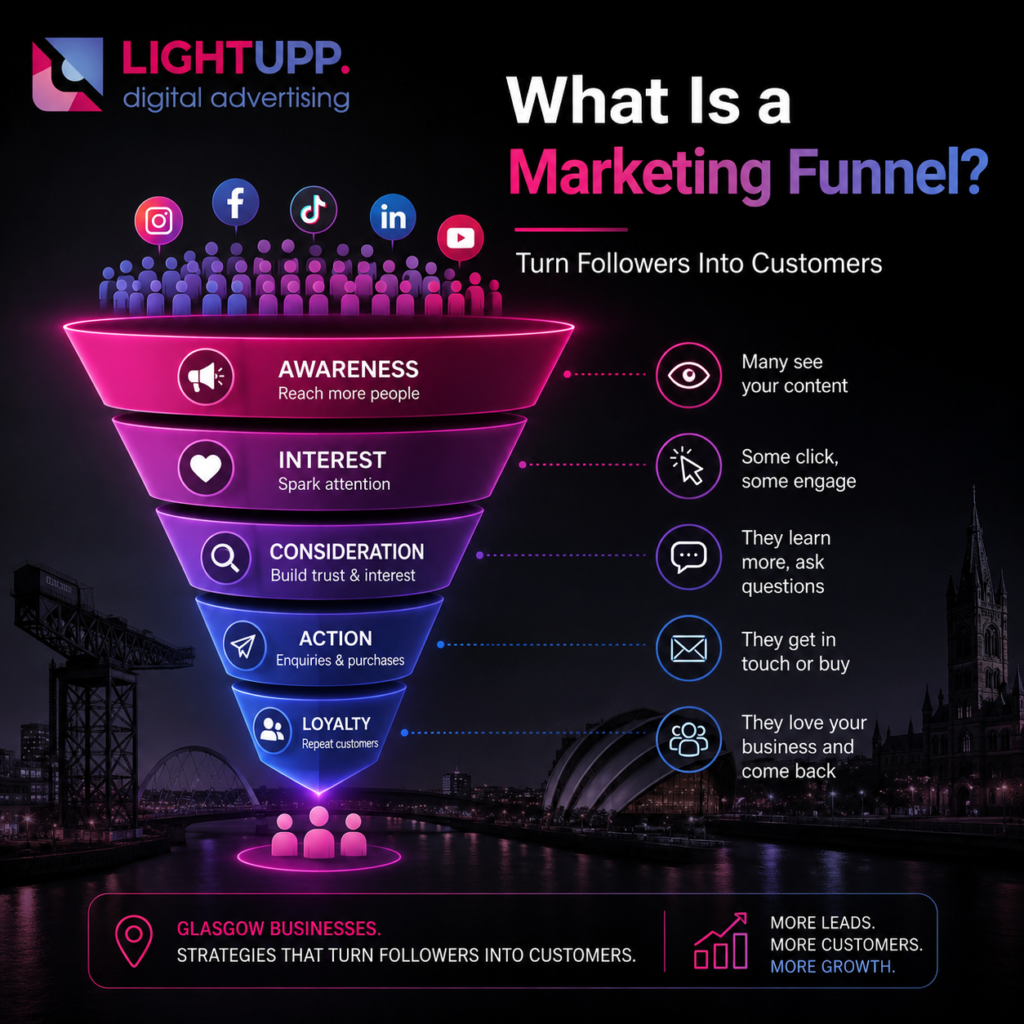
Forget the jargon. A funnel is just the journey from stranger to customer, broken into stages. It’s called a funnel because it narrows: lots of people become aware of you, fewer engage, fewer still buy. That’s normal and expected – the goal isn’t to stop people dropping out, it’s to make sure the ones who genuinely want what you offer can find their way through without hitting a dead end.
The classic stages look like this:
- Awareness – someone discovers your business exists
- Interest – they’re curious enough to look closer at what you do
- Consideration – they’re weighing you up against alternatives
- Action – they enquire, book, or buy
- Loyalty – they come back, and tell other people about you
Most local businesses do something at the top and something at the bottom, and nothing in between. That’s the gap where customers quietly disappear.
Stage 1: Awareness – Getting Found
This is where someone first encounters your business. They see a post, an ad, a Google result, or a friend mentions you. At this stage they don’t know or trust you yet, and they’re not ready to buy – so the job here is simply to be visible to the right people.
What works at this stage
- Paid social ads that reach a targeted audience who don’t know you yet
- Search ads that catch people actively looking for what you offer
- Consistent organic content that keeps you visible to your existing audience
- Word of mouth, PR, and local coverage that puts you in front of new people
A common mistake is trying to sell hard at this stage. Someone who’s known about you for four seconds isn’t ready for a pitch. If you’re deciding where to focus your awareness effort, our comparison of Facebook Ads vs Google Ads breaks down which suits your business.
Stage 2 & 3: Interest and Consideration – Where Most Businesses Lose People
This is the middle of the funnel, and it’s where the majority of Glasgow businesses have a hole. Someone’s interested – they’ve clicked your profile, visited your site, or looked you up. Now they’re deciding whether you’re credible and whether you’re the right choice. If nothing here reassures them, they leave and you never even know they were there.
What people are actually checking
- Does this business look active and legitimate?
- Have they done this for people like me before?
- What do other customers say about them?
- Do I understand what they actually offer and how it works?
What fills this gap
- A social presence that looks consistent, current, and professional
- Visible proof – reviews, testimonials, results, examples of your work
- Content that answers the questions people ask before buying
- Clear, honest explanation of what you do and who it’s for
This is exactly why a neglected profile costs you money even when you’re not posting to sell. People check you out before they commit – and if your last nine posts don’t hold up, that’s a decision made against you before you’ve spoken. Our piece on the half-second test covers how quickly that judgement happens.
Stage 4: Action – Making It Easy to Say Yes
Someone’s convinced. Now they need to act – and this is where friction kills conversions. Every extra step, unclear instruction, or unanswered message is a chance for them to change their mind.
- An obvious, single next step – call, message, book, or buy
- A landing page or profile that matches what the ad or post promised
- Fast replies – enquiries go cold quickly
- No unnecessary hoops between wanting to buy and being able to
Plenty of businesses spend heavily on awareness while leaving this stage broken – ads pointing at a weak page, or DMs going unanswered for days. That’s budget spent to bring people to a door that doesn’t open.
Stage 5: Loyalty – The Part Everyone Skips
The funnel doesn’t end at the sale. Existing customers are the cheapest source of repeat business and referrals you have, yet most local businesses stop paying attention the moment money changes hands. Staying visible to past customers, asking for reviews, and giving people a reason to come back turns a one-off sale into an ongoing relationship – and turns customers into the people who feed your awareness stage for free.
Green Flags vs Red Flags: Is Your Funnel Working?
A quick diagnostic on whether your funnel has holes in it:
| Green Flag | Red Flag |
| Clear path from discovery to enquiry | People find you, then nothing happens |
| Profile and site back up what your ads promise | Ads point somewhere that doesn’t match |
| Visible proof – reviews, results, examples | Nothing to reassure a cautious buyer |
| Enquiries answered quickly | Messages sit for days and go cold |
| You know where people drop off | No idea why followers never convert |
| Past customers stay engaged | Customers vanish after one purchase |
Why Followers Don’t Automatically Become Customers
Here’s the uncomfortable truth: followers are an awareness metric. They tell you people know you exist – nothing more. A follower becomes a customer only when something moves them through interest, consideration, and action. If you have an audience but no enquiries, the audience isn’t the problem; the missing middle is. Fixing that usually delivers more than chasing more followers ever will.
Why Glasgow Businesses Choose LightUpp
LightUpp builds the whole funnel rather than one piece of it – the ads that create awareness, the social presence and branding that build credibility in the middle, and the clear path to enquiry at the bottom. Because one team handles all of it, there are no gaps between what an ad promises and what someone finds when they click. That joined-up approach is what turns an audience into actual customers instead of just a follower count.


