



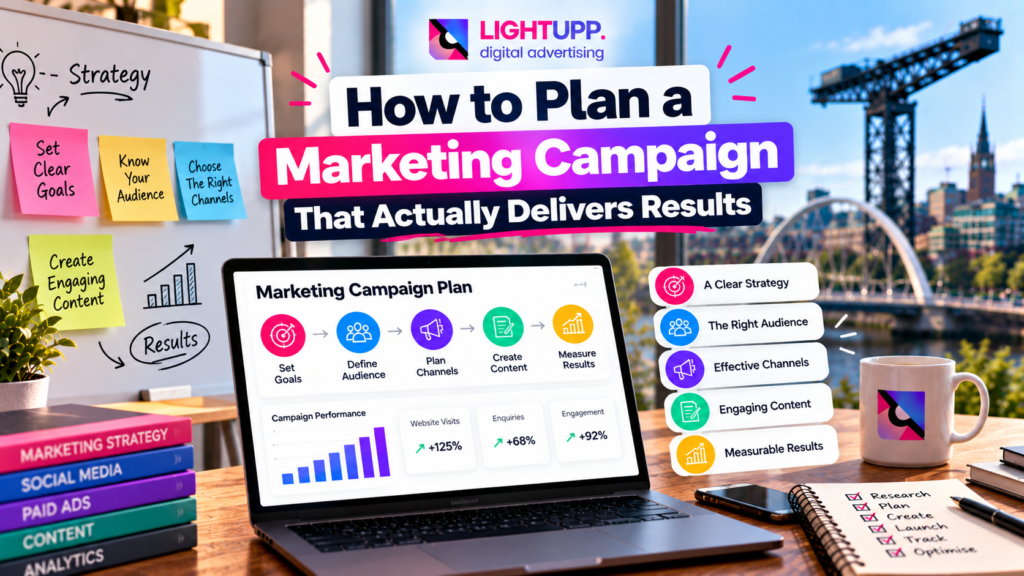
Most marketing campaigns that disappoint were never going to work. The ads were fine, the design was fine, the timing was fine but nobody decided clearly what the campaign was meant to achieve, who it was for, or how success would be measured. A campaign is simply a focused push towards one goal over a set period. Planning it properly takes far less time than running it, and it’s the part that decides whether the money spent comes back. This guide walks through how to plan one.
Campaign vs Ongoing Marketing
Your ongoing marketing regular social posts, a maintained Google profile, steady advertising keeps the business visible. A campaign is different: it has a start date, an end date, one main goal and usually extra budget behind it.
- Launching a new service, product or location
- Filling quieter months
- Promoting a seasonal offer or event
- Entering a new area or audience
- Re-engaging past customers
Step 1: Set One Clear Goal
A campaign with three goals usually achieves none of them. Choose the one result that matters most and make it measurable:
- 40 enquiries for a new service in six weeks
- 200 bookings for a launch weekend
- Fill weekday tables during January
Vague goals like “raise awareness” make it impossible to tell whether the campaign worked. If awareness really is the goal, decide how you’ll measure it searches for your name, profile visits or new followers.
Step 2: Know Exactly Who It’s For
“Everyone in Glasgow” isn’t an audience. Narrow it down: who is most likely to act, where do they live, what are they worried about, and where do they spend their time? The more specific the audience, the easier every later decision becomes.
If your business hasn’t settled who it’s for in general, that’s worth fixing first brand strategy vs branding https://lightupp.co.uk/brand-strategy-vs-branding-whats-the-difference-and-why-it-matters/ explains why.
Step 3: Build One Clear Message
Every piece of the campaign ads, posts, emails, printed materials should say the same core thing. One offer, one reason to act, one call to action. Repeating the same message across channels is what makes it stick; changing it every time confuses people.
That message then carries into everything you produce. Our guide to marketing materials that actually get used https://lightupp.co.uk/marketing-materials-that-actually-get-used-a-guide-for-glasgow-businesses/ covers how to apply it to print and digital pieces.
Step 4: Choose Channels Where Your Audience Already Is
Google Ads
Best for catching people actively searching. See our beginner’s guide to Google Ads https://lightupp.co.uk/google-ads-for-glasgow-businesses-a-beginners-guide-to-paid-search/.
Social media ads
Best for reaching people who match your audience but aren’t searching yet. How paid social actually works https://lightupp.co.uk/social-media-advertising-in-glasgow-how-paid-social-actually-works] explains targeting.
Outdoor
Best for local recognition around a launch or location. See our outdoor advertising https://lightupp.co.uk/outdoor/ options.
Email and existing customers
Often the cheapest and most effective channel people who already know you are the easiest to bring back.
PR and events
Best for launches with a genuine story. PR vs advertising https://lightupp.co.uk/pr-vs-advertising-whats-the-difference-and-which-does-your-business-need/ explains how they differ.
Two or three channels done properly beat six done thinly.
Step 5: Plan Where People Land
Every ad and post should send people to a page that continues the same message and makes acting easy. A campaign landing page with one offer and one clear action usually converts far better than the homepage. Lead generation for Glasgow businesses https://lightupp.co.uk/lead-generation-for-glasgow-businesses-how-to-turn-interest-into-enquiries/ covers how to make sure interest turns into enquiries.
Step 6: Set the Budget and Timeline
- Allocate budget per channel, weighted towards the one most likely to hit the goal
- Allow a short test period before committing the full budget
- Set clear start and end dates
- Schedule when creative will be produced and approved
Step 7: Decide How You’ll Measure It Before You Launch
Set up call tracking, form tracking and campaign links before anything goes live. Agree what success looks like and when you’ll review it. Checking weekly lets you move budget towards what’s working while the campaign is still running.
Green Flags vs Red Flags
| Green Flag | Red Flag |
|---|---|
| One measurable goal | Three vague goals at once |
| A specific audience | ‘Everyone in Glasgow’ |
| One message across every channel | A different message on each platform |
| Two or three channels done properly | Six channels done thinly |
| A landing page that matches the ad | Everything sent to the homepage |
| Tracking set up before launch | Trying to work out results afterwards |
After the Campaign
Write down what worked, what didn’t and what each enquiry cost. That record makes the next campaign faster to plan and cheaper to run. Over a year, those notes become your most useful marketing asset.
Why Glasgow Businesses Choose LightUpp
Our campaign strategy https://lightupp.co.uk/branding/campaign-strategy/ work starts with the goal and the audience, then brings together branding https://lightupp.co.uk/branding/, online ads https://lightupp.co.uk/online-ads/, social media and outdoor under one plan, run by one team. That means one message across every channel and one set of results to judge it by. More at LightUpp https://lightupp.co.uk/.
Frequently Asked Questions
How long should a marketing campaign run?
Long enough to gather meaningful results often four to eight weeks for a local business. Very short campaigns rarely give channels time to find the right people.
How many channels should a campaign use?
Usually two or three, chosen based on where your audience is. Spreading the budget across too many channels makes each one too weak to work.
What’s the most common campaign mistake?
Not setting a clear, measurable goal. Without one, there’s no way to plan properly or know whether it worked.
Do I need a landing page for a campaign?
It usually helps. A page that repeats the campaign’s message and has one clear action converts far better than sending people to your homepage.
Related Reading
Brand Strategy vs Branding the thinking behind every campaign https://lightupp.co.uk/brand-strategy-vs-branding-whats-the-difference-and-why-it-matters/
Lead Generation for Glasgow Businesses turning campaign interest into enquiries https://lightupp.co.uk/lead-generation-for-glasgow-businesses-how-to-turn-interest-into-enquiries/
Google Ads for Glasgow Businesses: A Beginner’s Guide a campaign channel explained https://lightupp.co.uk/google-ads-for-glasgow-businesses-a-beginners-guide-to-paid-search/


